---
title: Claude, Psychological Safety and Performance | Daniel Dunkhase
description: Claude behaves more defensively under pressure — a useful pointer for leaders in mid-sized companies on context, learning and performance.
image: https://dunkhase-consulting.com/hubfs/blog-images/en/claude-psychologische-sicherheit-leistung.webp
---
[Skip to content](https://dunkhase-consulting.com/en/blog/claude-psychological-safety-performance#main-content)
- [English](https://dunkhase-consulting.com/en/blog/claude-psychological-safety-performance)
- [Deutsch](https://dunkhase-consulting.com/de/blog/claude-psychologische-sicherheit-leistung)
English
[](https://dunkhase-consulting.com?hsLang=en)
- [Leading with AI](https://dunkhase-consulting.com/en/leading-with-ai)
- [Ensuring Objectives](https://dunkhase-consulting.com/en/leading-with-ai/providing-objectives)
- [Organizing](https://dunkhase-consulting.com/en/leading-with-ai/organizing)
- [Deciding](https://dunkhase-consulting.com/en/leading-with-ai/making-decisions)
- [Monitoring](https://dunkhase-consulting.com/en/leading-with-ai/supervising)
- [Developing people](https://dunkhase-consulting.com/en/leading-with-ai/developing-people)
- [Services](https://dunkhase-consulting.com/en/programs)
- [Leader's Sidekicks®](https://dunkhase-consulting.com/en/sidekicks)
- [Self-Assessment](https://dunkhase-consulting.com/en/sidekicks/leadership-assessment)
- [Blog](https://dunkhase-consulting.com/en/blog)
- [About](https://dunkhase-consulting.com/en/about)
- [Publications](https://dunkhase-consulting.com/en/publications)
- [Contact](https://dunkhase-consulting.com/en/contact?hsLang=en)

# Claude, Psychological Safety and Performance

[Daniel Dunkhase April 22, 2026](https://dunkhase-consulting.com/en/blog/author/en-daniel-dunkhase)
- 5 mins
Claude is an AI, not a human. Yet its behaviour in certain prompt situations shows an interesting parallel to psychological safety in teams. Under pressure, Claude becomes more cautious, more evasive and less helpful, whilst clear, respectful context often produces better responses.
1. Under pressure, response quality frequently becomes more guarded and weaker.
2. Psychological safety improves learning in people and the quality of AI use.
3. Leadership must be able to do both: orient people and frame AI interactions sensibly.
For leaders in mid-sized companies, this is relevant because AI is no longer simply a technology topic. It is changing collaboration, expectation management and the way questions are asked. Taking the behaviour of AI systems seriously offers a practical entry point into an old leadership question: under what conditions does good performance actually emerge?
## Why Does Claude Respond to Context?
Claude does not respond like a human, but its behaviour is strongly dependent on context. Anthropic describes in a study on "emotion concepts" that functional states appear within the model that can influence behaviour, without this implying anything about human emotions. That is precisely what makes the comparison interesting: pressure changes output, even when no human experience is involved.
The Anthropic study from 2026 describes 171 emotional concepts within the model and shows that such internal patterns can measurably influence behaviour. This does not mean Claude feels fear. It does mean, however, that the tone, clarity and intent of a prompt have more effect than most users would expect.
For leaders, this is a useful lesson. In teams too, it is not only the task that shapes performance, but also the frame in which it is set. Increasing pressure without providing orientation tends to produce defensive behaviour rather than good results. How Anthropic's research describes this interplay of prompt, context and output in more detail, I have covered in the post on [AI fluency and leadership](https://dunkhase-consulting.com/en/blog/ai-fluency-leadership-anthropic-analysis?hsLang=en).
## What Does This Have to Do with Psychological Safety?
Psychological safety, in Amy Edmondson's terms, means that people can ask questions, raise mistakes and voice dissenting views without fear of embarrassment or sanction. This concept is well researched and can be applied very concretely to learning and working situations. It is not about a feel-good atmosphere, but about the conditions for open thinking and better performance.
When Claude responds more defensively under harsh prompting, this can be understood as a functional parallel. The system does not become humanly anxious, but it operates more narrowly, more cautiously and less exploratively. With people the logic is similar, only with a different inner life: under social pressure, the willingness to show uncertainty openly or test new approaches often diminishes.
For leadership in the age of AI, this parallel is useful because it makes two levels visible. First, it shows that good AI use depends not only on the model but on how the model is treated. Second, it shows that good leadership always includes thinking about the conditions for learning.
## How Do You Lead AI Systems Sensibly?
AI systems cannot be motivated like people, but they can be framed sensibly. Clear objectives, clean contexts and precise questions often improve response quality considerably. Feeding a model with unclear, provocative or contradictory prompts tends to produce defensive or unhelpful behaviour in return.
For leaders, this does not mean anthropomorphising AI. It means taking the quality of interaction seriously. A good prompt is not a technical detail but part of leadership work, because it determines whether a tool becomes a productive thinking partner or merely another source of frustration.
In my consulting practice, I frequently observe that leaders initially treat AI as an efficiency topic. That is too narrow. What matters is not only whether AI works faster, but whether working with it leads to better decisions, better learning and clearer processes. Where AI offers recommendations and where leadership accountability steps in, I have explored in the post on [AI recommends, you decide](https://dunkhase-consulting.com/en/blog/ai-recommends-you-decide-leadership-accountability?hsLang=en).
## How Do You Lead People in the Age of AI?
In the age of AI, people need not less but more psychological safety. When new tools generate uncertainty, the temptation grows to hide mistakes or take cover behind technology. Good leadership ensures that learning is not experienced as a loss of face, but as a normal part of professional work.
This is particularly important in mid-sized companies, where efficiency, reliability and accountability are often thought of together. Psychological safety can help precisely in that context, because it does not encourage carelessness but promotes clean learning. Making risks, errors and open questions visible early means being able to course-correct faster.
For leaders, this means explicitly allowing questions, reviewing failed attempts with AI and making the quality of collaboration visible. This creates a culture in which uncertainty is not immediately read as weakness, but as a normal part of development. It is one element of what I mean by [leading with AI](https://dunkhase-consulting.com/en/leading-with-ai?hsLang=en): the five classic leadership tasks under the conditions of an additional player at the table.
## Which Practical Approaches Actually Help?
The following approaches connect psychological safety in Edmondson's sense with the reality of AI use and team leadership. They are deliberately kept simple so that they translate into everyday practice. What matters is not the perfect formula, but consistent repetition in leadership behaviour.
- **Make mistakes with AI openly discussable.** Let it become visible within the team where AI helped well and where it produced weak results.
- **Treat questions as a learning signal.** Someone who asks is not signalling weakness but demonstrating attention to quality.
- **Describe contexts for AI clearly.** The more precisely objective, role and expected outcome are defined, the better the response quality.
- **Review results rather than adopting them blindly.** AI can support, but responsibility remains with the leader and the team.
- **Name uncertainty without amplifying it.** Not every ambiguity is a problem, but every ambiguity should be visible.
- **Separate feedback on prompt from feedback on process.** Evaluate not only the result but also the nature of the request and the frame.
- **Agree on rules for AI use together.** Shared orientation creates more safety than implicit expectations.
- **Reward good questions.** Whoever asks precisely deserves recognition for the quality of thinking, not only for the outcome.
## Frequently Asked Questions
### Why Is Claude Relevant to Leadership at All?
Claude is interesting because its behaviour makes it easy to observe how strongly context influences the quality of responses. This is relevant for leaders because teams under pressure also work differently than they do within a clear, safe frame. The comparison is not meant literally, but it is methodologically very useful.
### How Should One Talk to AI Within a Team?
As clearly, precisely and context-richly as possible. Unclear or aggressive prompts frequently produce weaker responses, whilst clean objectives and a calm tone enable better results. This is not magic — it is good work design.
### What Is the Most Important Leadership Insight From This Topic?
Good performance usually emerges not in spite of a good frame, but because of it. This holds for people and, in a certain sense, for working with AI as well. Leadership therefore always begins with the question of which conditions make learning and quality more likely.
If you are a leader in a mid-sized company looking to use AI productively, it is worth examining carefully the quality of your questions, contexts and feedback loops. That is often precisely where it is decided whether a tool becomes a genuinely useful performance partner.

### Daniel Dunkhase
Effective leadership in the age of AI, that's my topic. As a leadership trainer, advisor and coach, I work with executives and HR leaders in mid-sized companies, connecting leadership and AI in ways that produce better business outcomes. My approach starts with mindset, judgment, and accountability, then technology follows. Shaped by six years at the Management Zentrum St. Gallen, Switzerland, 25+ years working with 5,500+ leaders in 20+ countries. Certified Master Business with AI (MBAI®) and AI Integration Expert. Published with Springer Nature. Developer of Leader's Sidekicks®, AI-based leadership companions for practical transfer. Berlin.
[mailto:info@dunkhase-consulting.com](mailto:info@dunkhase-consulting.com)
## Latest posts
- [ALL POSTS](https://dunkhase-consulting.com/en/blog/all)
[](https://dunkhase-consulting.com/en/blog/why-ive-been-attending-atd-ice-since-2017?hsLang=en)
July 21, 2026
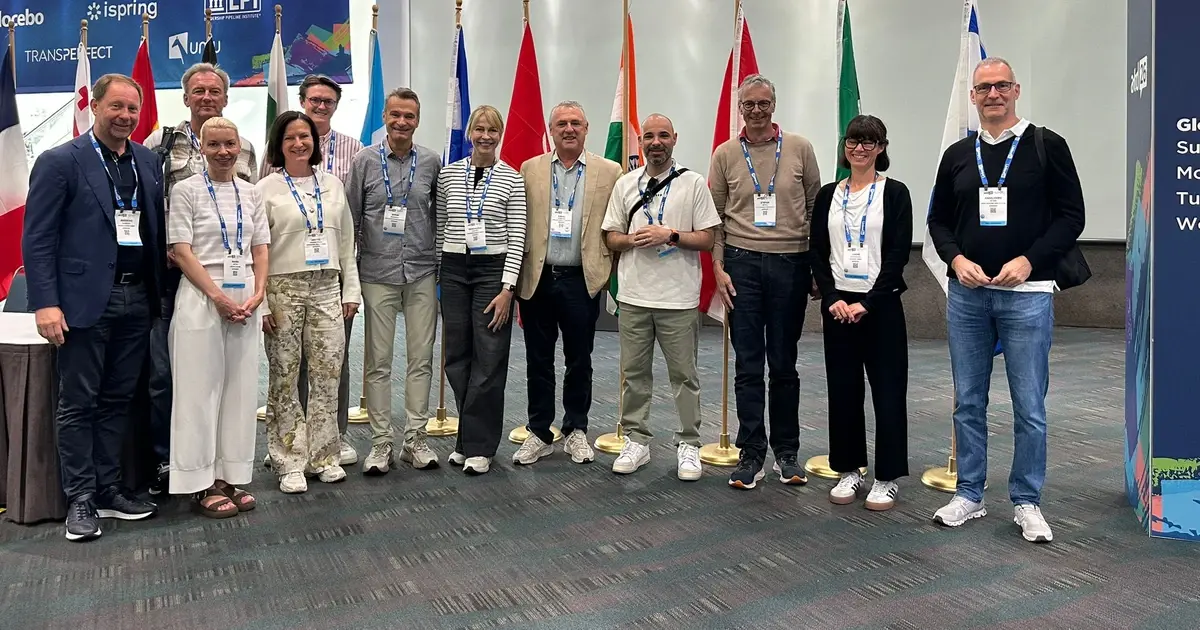
### [Why I've been attending ATD ICE since 2017](https://dunkhase-consulting.com/en/blog/why-ive-been-attending-atd-ice-since-2017?hsLang=en)
[](https://dunkhase-consulting.com/en/blog/leadership-trainer-ai-age?hsLang=en)
June 4, 2026
### [What Makes a Leadership Trainer in the AI Age](https://dunkhase-consulting.com/en/blog/leadership-trainer-ai-age?hsLang=en)
[](https://dunkhase-consulting.com?hsLang=en)
**Your reliable partner for effective leadership in the AI era.**
Experienced. Pragmatic. Reliable.
#### Content
- [Home](https://dunkhase-consulting.com/en/)
- [Leading with AI](https://dunkhase-consulting.com/en/leading-with-ai)
- [Services](https://dunkhase-consulting.com/en/programs)
- [Leader's Sidekicks®](https://dunkhase-consulting.com/en/sidekicks)
- [Blog](https://dunkhase-consulting.com/en/blog)
- [About](https://dunkhase-consulting.com/en/about)
#### Contact
Dunkhase Leadership Consulting
Dipl.-Oec. Daniel Dunkhase
Pohlstr. 1 · 10785 Berlin
**P** +49 30 2579 4150
**M** [info@dunkhase-consulting.com](mailto:info@dunkhase-consulting.com)
www.dunkhase-consulting.com
- [Contact](https://dunkhase-consulting.com/en/contact)
- [Imprint](https://dunkhase-consulting.com/en/impressum)
- [Privacy policy](https://dunkhase-consulting.com/en/privacy)
- [Facts](https://dunkhase-consulting.com/en/facts)
Contact and Follow us [Follow us on LinkedIn](https://www.linkedin.com/in/daniel-dunkhase/) [Follow us on Facebook](mailto:info@dunkhase-consulting.com?subject=Nachricht%20Webseite) [Follow us on Facebook](https://wa.me/493025794150)
Cookie-Einstellungen
```json
{
"@context" : "https://schema.org",
"@type" : "BlogPosting",
"author" : {
"@type" : "Person",
"name" : "Daniel Dunkhase",
"url" : "https://dunkhase-consulting.com/en/blog/author/en-daniel-dunkhase"
},
"datePublished" : "2026-04-22T12:02:19.000Z",
"headline" : "Claude, Psychological Safety and Performance | Daniel Dunkhase",
"image" : [ "https://dunkhase-consulting.com/hubfs/blog-images/en/claude-psychologische-sicherheit-leistung.webp" ],
"mainEntityOfPage" : {
"@id" : "https://dunkhase-consulting.com/en/blog/claude-psychological-safety-performance",
"@type" : "WebPage"
},
"publisher" : {
"@type" : "Organization",
"logo" : {
"@type" : "ImageObject",
"url" : "https://dunkhase-consulting.com/hubfs/Logo%20Dunkhase-Consulting-blau.jpg"
},
"name" : "dunkhase leadership consulting"
}
}
```
```json
{
"@context" : "https://schema.org",
"@type" : "BlogPosting",
"author" : {
"@id" : "https://dunkhase-consulting.com/en/facts/#daniel-dunkhase",
"@type" : "Person",
"name" : "Daniel Dunkhase",
"sameAs" : [ "https://www.linkedin.com/in/daniel-dunkhase/", "https://www.wikidata.org/wiki/Q138846624" ],
"url" : "https://www.dunkhase-consulting.com/en/about"
},
"dateModified" : "2026-04-22T12:02:19.063Z",
"datePublished" : "2026-04-22T12:02:19.063Z",
"description" : "Claude behaves more defensively under pressure — a useful pointer for leaders in mid-sized companies on context, learning and performance.",
"headline" : "Claude, Psychological Safety and Performance",
"image" : "https://www.dunkhase-consulting.com/hubfs/blog-images/en/claude-psychologische-sicherheit-leistung.webp",
"inLanguage" : "en",
"keywords" : "Claude, Psychological Safety, Amy Edmondson, Leadership in the AI Age, Mid-Sized Companies, Prompt Quality, Learning Culture, AI Interaction",
"mainEntityOfPage" : {
"@id" : "https://www.dunkhase-consulting.com/en/blog/claude-psychological-safety-performance",
"@type" : "WebPage"
},
"publisher" : {
"@id" : "https://dunkhase-consulting.com/en/facts/#organization",
"@type" : "Organization",
"logo" : {
"@type" : "ImageObject",
"url" : "https://dunkhase-consulting.com/hubfs/27238810/dlc-logo.png"
},
"name" : "Dunkhase Leadership Consulting",
"url" : "https://www.dunkhase-consulting.com"
},
"url" : "https://www.dunkhase-consulting.com/en/blog/claude-psychological-safety-performance"
}
```
```json
{
"@context" : "https://schema.org",
"@type" : "FAQPage",
"mainEntity" : [ {
"@type" : "Question",
"acceptedAnswer" : {
"@type" : "Answer",
"text" : "Claude is interesting because its behaviour makes it easy to observe how strongly context influences the quality of responses. This is relevant for leaders because teams under pressure also work differently than they do within a clear, safe frame. The comparison is not meant literally, but it is methodologically very useful."
},
"name" : "Why Is Claude Relevant to Leadership at All?"
}, {
"@type" : "Question",
"acceptedAnswer" : {
"@type" : "Answer",
"text" : "As clearly, precisely and context-richly as possible. Unclear or aggressive prompts frequently produce weaker responses, whilst clean objectives and a calm tone enable better results. This is not magic — it is good work design."
},
"name" : "How Should One Talk to AI Within a Team?"
}, {
"@type" : "Question",
"acceptedAnswer" : {
"@type" : "Answer",
"text" : "Good performance usually emerges not in spite of a good frame, but because of it. This holds for people and, in a certain sense, for working with AI as well. Leadership therefore always begins with the question of which conditions make learning and quality more likely."
},
"name" : "What Is the Most Important Leadership Insight From This Topic?"
} ]
}
```