---
title: Leadership Training, Development, Coaching & Keynotes - AI-Powered
description: Executive advisory for international leaders. Leadership development, coaching, and keynotes - with AI integrated throughout.
image: https://dunkhase-consulting.com/hubfs/daniel-dunkhase-keynote-fuehrung-ki.webp
---
[Skip to content](https://dunkhase-consulting.com/en/programs#main-content)
- [English](https://dunkhase-consulting.com/en/programs)
- [Deutsch](https://dunkhase-consulting.com/de/zusammenarbeit)
English
[](https://dunkhase-consulting.com?hsLang=en)
- [Leading with AI](https://dunkhase-consulting.com/en/leading-with-ai)
- [Ensuring Objectives](https://dunkhase-consulting.com/en/leading-with-ai/providing-objectives)
- [Organizing](https://dunkhase-consulting.com/en/leading-with-ai/organizing)
- [Deciding](https://dunkhase-consulting.com/en/leading-with-ai/making-decisions)
- [Monitoring](https://dunkhase-consulting.com/en/leading-with-ai/supervising)
- [Developing people](https://dunkhase-consulting.com/en/leading-with-ai/developing-people)
- [Services](https://dunkhase-consulting.com/en/programs)
- [Leader's Sidekicks®](https://dunkhase-consulting.com/en/sidekicks)
- [Self-Assessment](https://dunkhase-consulting.com/en/sidekicks/leadership-assessment)
- [Blog](https://dunkhase-consulting.com/en/blog)
- [About](https://dunkhase-consulting.com/en/about)
- [Publications](https://dunkhase-consulting.com/en/publications)
- [Contact](https://dunkhase-consulting.com/en/contact?hsLang=en)
Effective leadership in the age of AI. Tailored. AI-integrated. Results-oriented.
# Services
Every organization is different in terms of strategy, structure, culture, and leadership. I work with you to develop tailored leadership training and development programs, across all leadership levels, typically as in-house formats for mid-market companies. The goal: a shared leadership operating system that creates consistent leadership across your company. AI is woven in from the start: in design, delivery, and transfer. Let's start by talking about your business and the challenges you face.
[Book a Call](https://meetings-eu1.hubspot.com/dlc/dlc-website-erstgesprach)
## Keynotes
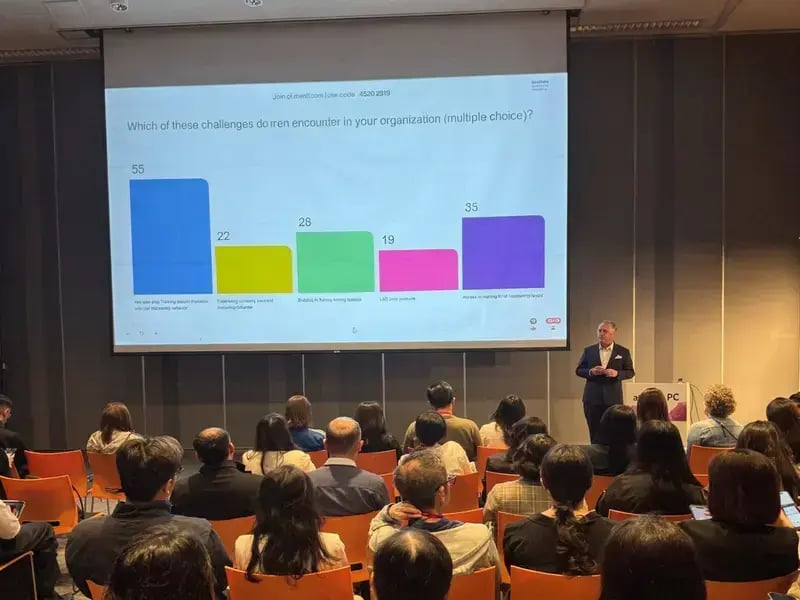
Keynotes on effective leadership in the age of AI, for leadership conferences, management offsites, and corporate events worldwide. Evidence-based, practical, and tailored to your audience.
## Leader's Sidekicks®
AI-powered leadership companions for daily practice, complementary to my work as a [leadership trainer](https://dunkhase-consulting.com/en/blog/leadership-trainer-ai-age?hsLang=en). Systemically designed, always available, for reflection, conversation preparation, and transfer between modules.

[Book a Call](https://meetings-eu1.hubspot.com/dlc/dlc-website-erstgesprach)
## Areas of Expertise
AI-Powered Leadership in every format.
01
### Leadership Development
Leadership training and programs for all levels, from first-line managers to the boardroom, typically in-house. Grounded in the St. Gallen Management Model, modular and AI-powered.
02
### C-Suite Performance
Senior leadership teams shape organizational culture. I help you achieve peak performance as a team, with clear role definition, strategic alignment, and a shared leadership philosophy.
03
### Executive Coaching & Sparring
Executive coaching, leadership coaching and sparring for CEOs, board members and senior leaders. For tough decisions and personal development with a partner who understands your business.
04
### Strategy & Transformation
Supporting the translation of strategy into effective leadership and management systems, with a particular focus on the cultural dimension of change. So that strategy translates into how leadership works day to day.

## Frequently Asked Questions
### How individual does leadership development need to be?
As individual as your business. It starts with a conversation about what matters to you: your strategy, culture, leadership philosophy, and the challenges your business is facing, including AI. From there, I put together a proposal that fits your objectives and your budget. Impact measurement and the use of [Leader’s Sidekicks®](https://dunkhase-consulting.com/en/sidekicks?hsLang=en) are part of the design from day one. Nothing off the shelf.
### Open seminars or in-house training: which works better for leadership development?
**For executive boards and senior management teams in the upper mid-market, tailored in-house programs are the most powerful lever.** Three reasons:
- **Top executives have little time.** Content must match your specific challenges exactly. Topics need to land.
- **Significant value comes from exchange among your own leaders.** Shared challenges, shared levers for change, a shared understanding of how to develop the organization.
- **In-house programs integrate seamlessly with your HR systems**. And amplify them.
Individual open seminars can be useful. For senior leadership teams, however, tailored in-house programs create far greater organizational leverage. That is why I offer leadership training exclusively as tailored in-house programs - alongside keynotes and impulse talks, which I also deliver in public formats.
### What makes a leadership training effective?
An effective leadership training is designed from the business outward. Content, cases, and practice projects are tied to the company's actual context, not textbook examples. Leaders are not just participants once the training starts; they are involved in designing the program from the outset. Where they exist, I integrate the company's HR instruments (such as conversation guides or appraisal frameworks) directly into the program, so the training reinforces existing structures rather than running alongside them.
AI is woven into the program, not added as a final module. Through the "Daily Dose of AI" format, I link AI fluency (skills and reflection) to everyday leadership practice.
Transfer is built into the design. Line managers are involved, cultural patterns are reflected on, and participants develop shared approaches and networks that last beyond the program. The result is more reliable leadership. And an ongoing exchange on professional and leadership topics that continues well after the training.
### What is the difference between leadership training and leadership development?
**Leadership training is one element of effective leadership development. Not a substitute for it.**
Standalone **leadership training** often stays too generic and is rarely aligned with other trainings or with your leadership guidelines. As a result, its impact tends to fade quickly.
**Leadership development** is the larger process. It begins with a classic Drucker insight: **people develop through tasks, not through methods.** That is why the real leadership tasks of your organization are the starting point of my programs, not abstract curricula.
From there, an integrated learning journey unfolds across multiple modules: practice phases on real projects, structured reflection, virtual kick-offs and workshops, AI-supported transfer through Leader's Sidekicks®, transfer assignments between modules. In addition, patterns across the group are identified and translated into aggregated feedback for the executive board and HR, without personal attribution.
What emerges is impact at the organizational level, not just individual capability.
### Why a program across all leadership levels rather than individual trainings?
**Because individual trainings for individual leaders do not create a shared understanding of leadership. Programs across all leadership levels do.**
From the perspective of the executive board, a program across all leadership levels delivers four levers:
- **Collaboration across levels and regions** - shared language, shared principles, shared tools.
- **Reliability as an employer brand** - leadership behavior becomes more consistent, which matters for both recruiting and retention.
- **A sharper connection between company tradition, values, and day-to-day leadership practice.**
- **Accelerated transformation** - all leaders understand and use the same levers.
Individual trainings create capability in individuals. A cross-level leadership program creates a **shared leadership operating system** for the organization.
### What is a solid methodological foundation for leadership development?
The **St. Gallen Management Model** provides a holistic perspective rather than focusing on isolated parts, and it remains relevant independent of management fads. That is why it is the frame of my programs. I adapt content and depth to the level and topic so that all elements fit together.
In terms of content, I draw on **Peter F. Drucker and the five tasks of effective leadership**. The St. Gallen tradition and Drucker align well, and that is where my work sits.
AI is anchored methodologically on three levels: **before the program** (self-assessments, expectations), **during the program** ("Daily Dose of AI", using the company's existing AI tools), and **beyond it** (Leader's Sidekicks® for transfer and reflection after the training days).
For reflection, I use a deliberate shift between "Balcony and Dance Floor": between distance and action.
### How does leadership development work in international organizations?
Leadership across borders needs a shared understanding that works across cultures, without losing coherence. Many of my clients operate internationally. When the CEO or managing director is personally involved, things move faster. I have worked with organizations in more than 20 countries over the past 25 years.
### What is the difference between executive coaching and leadership development?
Leadership development is group-based and focuses on building shared leadership capability across your company. At its core, leadership training in groups, complemented by Leader's Sidekicks®, virtual formats and transfer coaching between modules. Topics include leadership philosophy, management fundamentals, and [leading effectively with AI](https://dunkhase-consulting.com/en/leading-with-ai?hsLang=en). Executive coaching is one-on-one, confidential work with CEOs and senior leaders on their individual challenges. The two complement each other well.
### What is the difference between executive coaching and leadership coaching?
At their core, **executive coaching** and **leadership coaching** are very similar: both are confidential 1:1 formats that create space for reflection on your own leadership topics and role-related challenges.
**Executive coaching** is usually broader in scope: covering business, stakeholders, organizational politics, leadership, transformation, and personal areas of tension. This requires significant experience and the ability to work flexibly across content areas. The St. Gallen Management Model and systems-oriented management give me the reflection frame; 25 years of cross-industry experience provide the necessary breadth.
Both formats can be combined with leadership development programs.
### What is a good starting point for leadership development?
Often with a keynote or a management workshop. Many collaborations begin there and evolve. A short introductory call is usually enough to determine which format creates the most value for your situation.
### Where does AI add value in leadership development, and where do people?
AI is embedded throughout. But only where it adds genuine value to the work. Some topics need the energy of in-person workshops and face-to-face coaching. AI is strongest where round-the-clock availability matters, where leaders need support in their day-to-day workflow, and where building consistent habits counts. That is where Leader’s Sidekicks® come in, AI-powered companions built around your company, your values, and your leadership principles.
### How long does effective leadership development take?
As long as behavior change takes: single training days create impulses, impact builds over months. Sustainable programs are designed as a learning journey - several modules with practice phases in between, in which leaders work on real tasks from their own organization. In my programs, transfer support through Leader's Sidekicks® comes on top. The duration depends on objectives and leadership levels; what matters is the rhythm of learning, applying, and reflecting.
### How do you measure the ROI of leadership development?
On three levels: behavior (structured feedback, for example before and after the program), team (collaboration, engagement, retention) and business (the KPIs the program is designed to move). Measurement works best when it is built into the design from day one rather than added afterwards. In my programs this includes pattern recognition across the group, translated into aggregated feedback for the executive board and HR - without personal attribution.
[Let's Talk About Your Business](https://meetings-eu1.hubspot.com/dlc/dlc-website-erstgesprach)
[](https://dunkhase-consulting.com?hsLang=en)
**Your reliable partner for effective leadership in the AI era.**
Experienced. Pragmatic. Reliable.
#### Content
- [Home](https://dunkhase-consulting.com/en/)
- [Leading with AI](https://dunkhase-consulting.com/en/leading-with-ai)
- [Services](https://dunkhase-consulting.com/en/programs)
- [Leader's Sidekicks®](https://dunkhase-consulting.com/en/sidekicks)
- [Blog](https://dunkhase-consulting.com/en/blog)
- [About](https://dunkhase-consulting.com/en/about)
#### Contact
Dunkhase Leadership Consulting
Dipl.-Oec. Daniel Dunkhase
Pohlstr. 1 · 10785 Berlin
**P** +49 30 2579 4150
**M** [info@dunkhase-consulting.com](mailto:info@dunkhase-consulting.com)
www.dunkhase-consulting.com
- [Contact](https://dunkhase-consulting.com/en/contact)
- [Imprint](https://dunkhase-consulting.com/en/impressum)
- [Privacy policy](https://dunkhase-consulting.com/en/privacy)
- [Facts](https://dunkhase-consulting.com/en/facts)
Contact and Follow us [Follow us on LinkedIn](https://www.linkedin.com/in/daniel-dunkhase/) [Follow us on Facebook](mailto:info@dunkhase-consulting.com?subject=Nachricht%20Webseite) [Follow us on Facebook](https://wa.me/493025794150)
Cookie-Einstellungen
```json
{
"@context" : "https://schema.org",
"@id" : "https://dunkhase-consulting.com/en/facts/#organization",
"@type" : "ProfessionalService",
"address" : {
"@type" : "PostalAddress",
"addressCountry" : "DE",
"addressLocality" : "Berlin",
"postalCode" : "10785",
"streetAddress" : "Pohlstr. 1"
},
"email" : "info@dunkhase-consulting.com",
"founder" : {
"@id" : "https://dunkhase-consulting.com/en/facts/#daniel-dunkhase",
"@type" : "Person",
"name" : "Daniel Dunkhase",
"sameAs" : [ "https://www.linkedin.com/in/daniel-dunkhase/", "https://www.wikidata.org/wiki/Q138846624" ]
},
"hasOfferCatalog" : {
"@type" : "OfferCatalog",
"itemListElement" : [ {
"@type" : "Offer",
"itemOffered" : {
"@type" : "Service",
"description" : "Tailored leadership training programs for all leadership levels - from first-line managers to the boardroom, typically as in-house formats. Grounded in the St. Gallen Management Model, modular, with AI-powered transfer between modules.",
"name" : "Executive Leadership Development and Leadership Training"
}
}, {
"@type" : "Offer",
"itemOffered" : {
"@type" : "Service",
"description" : "Top management team development with clear role distribution, strategic alignment, and a shared understanding of leadership.",
"name" : "C-Suite Performance"
}
}, {
"@type" : "Offer",
"itemOffered" : {
"@type" : "Service",
"description" : "One-on-one advisory for CEOs, board members, and senior leaders - executive coaching and leadership coaching in the narrower sense. For tough decisions, change processes, conflict management, and personal development.",
"name" : "Executive Coaching, Leadership Coaching and Sparring"
}
}, {
"@type" : "Offer",
"itemOffered" : {
"@type" : "Service",
"description" : "Translating strategy into effective leadership and steering systems with focus on the cultural dimension of change.",
"name" : "Strategy and Transformation"
}
}, {
"@type" : "Offer",
"itemOffered" : {
"@type" : "Service",
"description" : "Pointed keynotes on effective leadership in the age of AI for leadership conferences, management offsites and corporate events.",
"name" : "Keynotes and Impulse Talks"
}
}, {
"@type" : "Offer",
"itemOffered" : {
"@type" : "Service",
"description" : "AI-based leadership companions for daily practice. Systemically grounded, always available. GDPR-compliant on European infrastructure.",
"name" : "Leader's Sidekicks®"
}
} ],
"name" : "Programs and Services"
},
"name" : "Dunkhase Leadership Consulting",
"telephone" : "+49 30 2579 4150",
"url" : "https://dunkhase-consulting.com"
}
```
```json
{
"@context" : "https://schema.org",
"@type" : "WebPage",
"description" : "Leadership development, executive coaching and keynotes. Programs for mid-market and enterprise organizations with AI integration.",
"name" : "Programs and Services – Dunkhase Leadership Consulting",
"provider" : {
"@id" : "https://dunkhase-consulting.com/en/facts/#organization",
"@type" : "ProfessionalService"
},
"url" : "https://dunkhase-consulting.com/en/programs"
}
```
```json
{
"@context" : "https://schema.org",
"@id" : "https://dunkhase-consulting.com/en/programs#faqpage",
"@type" : "FAQPage",
"mainEntity" : [ {
"@type" : "Question",
"acceptedAnswer" : {
"@type" : "Answer",
"text" : "As individual as your business. It starts with a conversation about what matters to you - your strategy, culture, leadership philosophy, and the challenges your business is facing, including AI. From there, I put together a proposal that fits your objectives and your budget. Impact measurement and the use of Leader’s Sidekicks® are part of the design from day one. Nothing off the shelf.
"
},
"name" : "How individual does leadership development need to be?"
}, {
"@type" : "Question",
"acceptedAnswer" : {
"@type" : "Answer",
"text" : "For executive boards and senior management teams in the upper mid-market, tailored in-house programs are the most powerful lever. Three reasons:
- Top executives have little time. Content must match your specific challenges exactly - topics need to land.
- The greatest value comes from exchange among your own leaders. Shared challenges, shared levers for change, a shared understanding of how to develop the organization.
- In-house programs integrate seamlessly with your HR systems - and amplify them.
Individual open seminars can be useful. For senior leadership teams, however, tailored in-house programs create far greater organizational leverage. That is why I offer leadership training exclusively as tailored in-house programs - alongside keynotes and impulse talks, which I also deliver in public formats.
"
},
"name" : "Open seminars or in-house training: which works better for leadership development?"
}, {
"@type" : "Question",
"acceptedAnswer" : {
"@type" : "Answer",
"text" : "An effective leadership training is designed from the business outward. Content, cases, and practice projects are tied to the company's actual context, not textbook examples. Leaders are not just participants once the training starts; they are involved in designing the program from the outset. Where they exist, I integrate the company's HR instruments - such as conversation guides or appraisal frameworks - directly into the program, so the training reinforces existing structures rather than running alongside them.\n\nAI is woven into the program, not added as a final module. Through the \"Daily Dose of AI\" format, I link AI fluency - skills and reflection - to everyday leadership practice.\n\nTransfer is built into the design. Line managers are involved, cultural patterns are reflected on, and participants develop shared approaches and networks that last beyond the program. The result is more reliable leadership - and an ongoing exchange on professional and leadership topics that continues well after the training."
},
"name" : "What makes a leadership training effective?"
}, {
"@type" : "Question",
"acceptedAnswer" : {
"@type" : "Answer",
"text" : "Leadership training is one element of effective leadership development - not a substitute for it.
Standalone leadership training often stays too generic and is rarely aligned with other trainings or with your leadership guidelines. As a result, its impact tends to fade quickly.
Leadership development is the larger process - and it begins with a classic Drucker insight: people develop through tasks, not through methods. That is why the real leadership tasks of your organization are the starting point of my programs, not abstract curricula.
From there, an integrated learning journey unfolds across multiple modules: practice phases on real projects, structured reflection, virtual kick-offs and workshops, AI-supported transfer through Leader's Sidekicks®, transfer assignments between modules. In addition, patterns across the group are identified and translated into aggregated feedback for the executive board and HR - without personal attribution.
What emerges is impact at the organizational level, not just individual capability.
"
},
"name" : "What is the difference between leadership training and leadership development?"
}, {
"@type" : "Question",
"acceptedAnswer" : {
"@type" : "Answer",
"text" : "Because individual trainings for individual leaders do not create a shared understanding of leadership. Programs across all leadership levels do.
From the perspective of the executive board, a program across all leadership levels delivers four levers:
- Collaboration across levels and regions - shared language, shared principles, shared tools.
- Reliability as an employer brand - leadership behavior becomes more consistent, which matters for both recruiting and retention.
- A sharper connection between company tradition, values, and day-to-day leadership practice.
- Accelerated transformation - all leaders understand and use the same levers.
Individual trainings create capability in individuals. A cross-level leadership program creates a shared leadership operating system for the organization.
"
},
"name" : "Why a program across all leadership levels rather than individual trainings?"
}, {
"@type" : "Question",
"acceptedAnswer" : {
"@type" : "Answer",
"text" : "The St. Gallen Management Model provides a holistic perspective rather than focusing on isolated parts, and it remains relevant independent of management fads. That is why it is the frame of my programs. I adapt content and depth to the level and topic so that all elements fit together.\n\nIn terms of content, I draw on Peter F. Drucker and the five tasks of effective leadership. The St. Gallen tradition and Drucker align well, and that is where my work sits.\n\nAI is anchored methodologically on three levels: before the program (self-assessments, expectations), during the program (\"Daily Dose of AI\", using the company's existing AI tools), and beyond it (Leader's Sidekicks® for transfer and reflection after the training days).\n\nFor reflection, I use a deliberate shift between \"Balcony and Dance Floor\" - between distance and action."
},
"name" : "What is a solid methodological foundation for leadership development?"
}, {
"@type" : "Question",
"acceptedAnswer" : {
"@type" : "Answer",
"text" : "Leadership across borders needs a shared understanding that works across cultures - without losing coherence. Many of my clients operate internationally. When the CEO or managing director is personally involved, things move faster. I have worked with organizations in more than 20 countries over the past 25 years.
"
},
"name" : "How does leadership development work in international organizations?"
}, {
"@type" : "Question",
"acceptedAnswer" : {
"@type" : "Answer",
"text" : "Leadership development is group-based and focuses on building shared leadership capability across your company - at its core, leadership training in groups, complemented by Leader's Sidekicks®, virtual formats and transfer coaching between modules. Topics include leadership philosophy, management fundamentals, and leading effectively with AI. Executive coaching is one-on-one, confidential work with CEOs and senior leaders on their individual challenges. The two complement each other well.
"
},
"name" : "What is the difference between executive coaching and leadership development?"
}, {
"@type" : "Question",
"acceptedAnswer" : {
"@type" : "Answer",
"text" : "At their core, executive coaching and leadership coaching are very similar: both are confidential 1:1 formats that create space for reflection on your own leadership topics and role-related challenges.
Executive coaching is usually broader in scope - covering business, stakeholders, organizational politics, leadership, transformation, and personal areas of tension. This requires significant experience and the ability to work flexibly across content areas. The St. Gallen Management Model and systems-oriented management give me the reflection frame; 25 years of cross-industry experience provide the necessary breadth.
Both formats can be combined with leadership development programs.
"
},
"name" : "What is the difference between executive coaching and leadership coaching?"
}, {
"@type" : "Question",
"acceptedAnswer" : {
"@type" : "Answer",
"text" : "Often with a keynote or a management workshop - many collaborations begin there and evolve. A short introductory call is usually enough to determine which format creates the most value for your situation.
"
},
"name" : "What is a good starting point for leadership development?"
}, {
"@type" : "Question",
"acceptedAnswer" : {
"@type" : "Answer",
"text" : "AI is embedded throughout - but only where it adds real value. Some topics need the energy of in-person workshops and face-to-face coaching. AI is strongest where round-the-clock availability matters, where leaders need support in their day-to-day workflow, and where building consistent habits counts. That is where Leader’s Sidekicks® come in - AI-powered companions built around your company, your values, and your leadership principles.
"
},
"name" : "Where does AI add value in leadership development, and where do people?"
}, {
"@type" : "Question",
"acceptedAnswer" : {
"@type" : "Answer",
"text" : "As long as behavior change takes: single training days create impulses, impact builds over months. Sustainable programs are designed as a learning journey - several modules with practice phases in between, in which leaders work on real tasks from their own organization. In my programs, transfer support through Leader's Sidekicks® comes on top. The duration depends on objectives and leadership levels; what matters is the rhythm of learning, applying, and reflecting.
"
},
"name" : "How long does effective leadership development take?"
}, {
"@type" : "Question",
"acceptedAnswer" : {
"@type" : "Answer",
"text" : "On three levels: behavior (structured feedback, for example before and after the program), team (collaboration, engagement, retention) and business (the KPIs the program is designed to move). Measurement works best when it is built into the design from day one rather than added afterwards. In my programs this includes pattern recognition across the group, translated into aggregated feedback for the executive board and HR - without personal attribution.
"
},
"name" : "How do you measure the ROI of leadership development?"
} ]
}
```
```json
{
"@context" : "https://schema.org",
"@type" : "BreadcrumbList",
"itemListElement" : [ {
"@type" : "ListItem",
"item" : "https://dunkhase-consulting.com/en/",
"name" : "Home",
"position" : 1
}, {
"@type" : "ListItem",
"item" : "https://dunkhase-consulting.com/en/programs",
"name" : "Programs",
"position" : 2
} ]
}
```