---
title: What Makes a Leadership Trainer in the AI Age | Daniel Dunkhase
description: "What makes an effective leadership trainer in the AI age: methodological foundation, three-level AI integration, mindset development and sustained transfer support."
image: https://dunkhase-consulting.com/hubfs/blog-images/en/fuehrungstrainer-ki-zeitalter-daniel-dunkhase.webp
---
[Skip to content](https://dunkhase-consulting.com/en/blog/leadership-trainer-ai-age#main-content)
- [English](https://dunkhase-consulting.com/en/blog/leadership-trainer-ai-age)
- [Deutsch](https://dunkhase-consulting.com/de/blog/fuehrungstrainer-ki-zeitalter)
English
[](https://dunkhase-consulting.com?hsLang=en)
- [Leading with AI](https://dunkhase-consulting.com/en/leading-with-ai)
- [Ensuring Objectives](https://dunkhase-consulting.com/en/leading-with-ai/providing-objectives)
- [Organizing](https://dunkhase-consulting.com/en/leading-with-ai/organizing)
- [Deciding](https://dunkhase-consulting.com/en/leading-with-ai/making-decisions)
- [Monitoring](https://dunkhase-consulting.com/en/leading-with-ai/supervising)
- [Developing people](https://dunkhase-consulting.com/en/leading-with-ai/developing-people)
- [Services](https://dunkhase-consulting.com/en/programs)
- [Leader's Sidekicks®](https://dunkhase-consulting.com/en/sidekicks)
- [Self-Assessment](https://dunkhase-consulting.com/en/sidekicks/leadership-assessment)
- [Blog](https://dunkhase-consulting.com/en/blog)
- [About](https://dunkhase-consulting.com/en/about)
- [Publications](https://dunkhase-consulting.com/en/publications)
- [Contact](https://dunkhase-consulting.com/en/contact?hsLang=en)

# What Makes a Leadership Trainer in the AI Age

[Daniel Dunkhase June 4, 2026](https://dunkhase-consulting.com/en/blog/author/en-daniel-dunkhase)
- 6 mins
AI is changing the tools of leadership. The fundamentals of effective leadership remain the same. Anyone developing leaders today faces a dual task: conveying proven principles of effective leadership while showing how these principles apply in a work environment supported by AI. This article describes how to recognise a leadership trainer who masters both.
## What a leadership trainer must be able to do today
The debate about AI in leadership development often runs along the wrong axis. Many programmes focus on tool training: how to operate a particular AI system, which prompts work, which platform will prevail. That is understandable but falls short. AI makes leadership more demanding. It delivers suggestions and leaves the decision to the leader, so their judgement becomes more important.
Leadership is a learnable craft. Solid training is possible for anyone, and professionalism can be developed. That conviction holds; what changes is the context in which this professionalism is applied today.
A leadership trainer working effectively today operates on three levels:
- **AI as a personal productivity tool:** Leaders learn how to use AI-supported systems for their own work without outsourcing judgement and reflection.
- **Steering AI in the team:** Leaders actively shape how AI tools are deployed in the team. Cultural questions (trust, transparency, responsibility) are at least as relevant as technical ones.
- **Integrating AI into leadership structures:** Here the focus is on how decision processes, role distribution and leadership architecture are adapted when AI becomes a permanent part of the organisation.
These three levels are an observation from practice. Leaders working on only one level will eventually run into difficulties on the other two. A well-established leadership trainer accompanies the development process on all three.
A further dimension is mindset. Patterns such as "always appearing confident", the expectation of being an expert in everything, or the assumption that control creates clarity hold leaders back in the AI age. On my page on [AI-supported leadership](https://dunkhase-consulting.com/en/leading-with-ai?hsLang=en), I describe seven mindset shifts that matter in practice.
## What CEOs and HR should consider when selecting a leadership trainer
Selecting a leadership trainer is an investment decision, and it is rarely made on methodological criteria alone. That is understandable: personality, background and credibility play a role that is hard to capture in a checklist. Still, a few questions help with the selection.
A first point of orientation is the methodological foundation. Leadership training built on solid management theory (Drucker's work, systems-oriented thinking) has different substance from programmes built around current trends. Both have their place, and the weighting shows how a trainer understands leadership.
How a leadership trainer handles transfer is also relevant. Training that stays in the seminar room changes little. In my work, I use Leader's Sidekicks: AI-supported reflection companions that act as systemic micro-companions in everyday leadership. They support leaders in concrete situations such as delegation, feedback or role clarification, in a conversational, non-lecturing tone. Short, repeated moments of reflection in the work context produce high transfer rates, according to learning research. A study by Arakawa and Yakura (2024) on AI-supported coaching copilots shows that well-designed self-reflection questions increase transfer compared to conventional formats by approximately 20 percentage points on average. The Sidekicks close the gap between the development moment and everyday leadership, and they complement personal coaching and training.
Another point concerns the breadth of the development approach. Leadership development that addresses only knowledge and method covers only part of the task. Mindset changes require more: reflection, friction, adaptation. A leadership trainer working solely in the trainer role has narrower impact than someone who also works as a consultant and coach when the situation calls for it. I work with a triad of roles: trainer, consultant and coach. The trainer role is primary; the other two come into play where the development task requires it.
One more point is the trainer's own AI practice. Anyone who teaches leadership in the AI age should use AI in their own work and know its possibilities and limits from hands-on experience. I use AI across all areas of my business, from preparing training and analysing leadership situations to developing the Leader's Sidekicks, and I handle my clients' confidential information with care throughout. This lived practice provides concrete examples and keeps my recommendations close to the reality leaders face.
One more point is responsible use of the technology. Human-centred AI in the spirit of the EU AI Act is a working principle for me: transparency, autonomy, fairness and data protection. People decide, AI supports. In practice, the Leader's Sidekicks run on European-hosted, GDPR-compliant systems, and I make potential [bias](https://dunkhase-consulting.com/en/blog/ai-and-bias-prejudices-artificial-intelligence-leadership?hsLang=en) an explicit topic.
Finally, AI also affects the mood within teams. This is exactly where the seven mindset shifts come in, from embracing uncertainty to releasing control. From years of experience in team development and change facilitation, I know that change works when leaders take fears and resistance seriously, provide orientation, and build [psychological safety](https://dunkhase-consulting.com/en/blog/claude-psychological-safety-performance?hsLang=en), so that people experiment openly with AI.
More on what a collaboration looks like can be found on the [programs page](https://dunkhase-consulting.com/en/programs?hsLang=en).
## How I work as a leadership trainer
My work as a leadership trainer rests on the conviction that leadership is learnable. Leadership principles proven in practice can be developed systematically. The St. Gallen Management Model provides the conceptual framework: systems-oriented, holistic, practice-focused.
I work with leaders at all levels, from the board to emerging leaders. Formats vary: individual coaching, group formats, workshop series, combined with digital support formats. What stays constant is the focus on concrete leadership situations. Abstract models interest me insofar as they change something in practice.
The AI component in my work is part of my methodological approach. It includes work with Leader's Sidekicks, as well as the questions AI raises in organisations: How does decision-making responsibility change when AI provides recommendations? How does leadership stay connected to a team that works with AI tools unevenly? How do leaders develop AI fluency while keeping the leadership task in view?
These questions occupy me in my own work and in my publications. In an article for Wirtschaftsinformatik & Management, I argued that AI changes leadership above all by sharpening paradoxes: human qualities such as empathy, intuition and judgement gain importance precisely because AI takes over in many areas. A leadership trainer who has understood this places these human qualities at the centre of the development work.
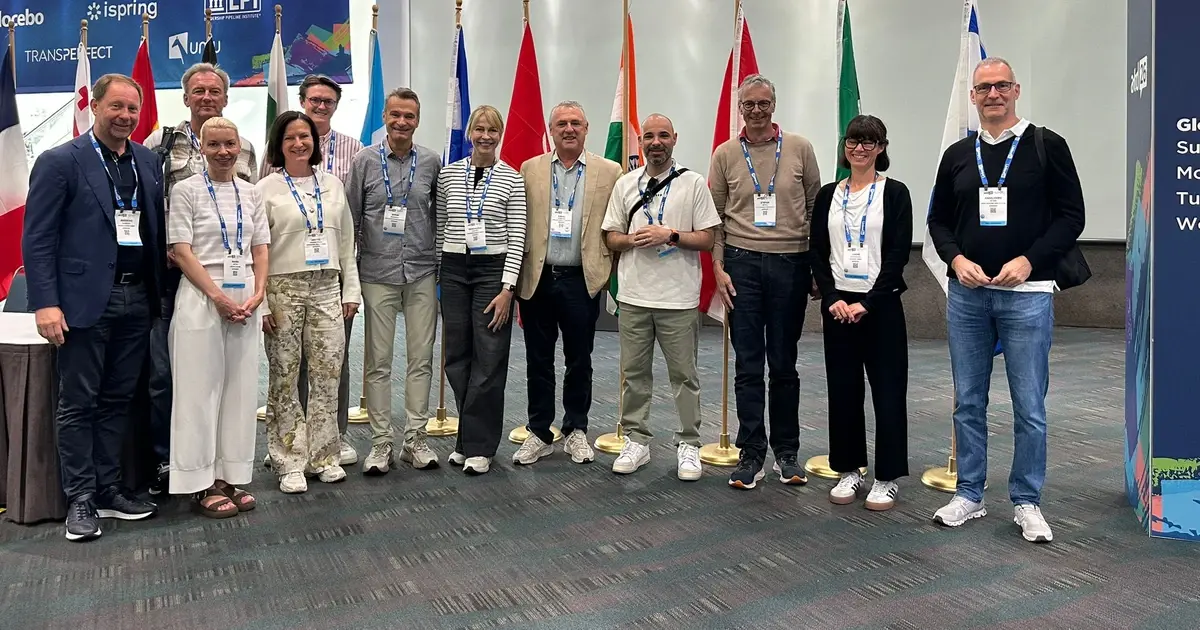
A client from a family-owned company, whose management I support across several leadership levels and in global programmes, describes the collaboration as an important contribution to the company's development. Alongside this come international engagements such as the ATD Asia Pacific Conference in Taipei. More on the [facts page](https://dunkhase-consulting.com/en/facts?hsLang=en).
---
## Checklist: Questions to Ask a Leadership Trainer in the AI Age
You can put these questions to a leadership trainer directly in conversation:
- **Methodological foundation:** What management theory is your training built on?
- **Transfer:** How do you support development before, during and after the training, into everyday leadership?
- **Breadth of roles:** Do you work only as a trainer, or also as a consultant and coach depending on the situation?
- **Mindset:** How do you address mindset and reflection alongside knowledge and method?
- **Own AI practice:** How do you use AI in your own work?
- **Leadership levels:** Does your approach fit our leadership levels, from the board to emerging leaders?
- **References:** What experience and references do you have in comparable contexts?
- **Responsibility:** How do you handle data protection, bias and transparency when using AI?
- **Leading through change:** How do you help leaders guide their teams through AI-driven change, with trust and psychological safety?
## Frequently Asked Questions
What distinguishes a leadership trainer from a coach?
A leadership trainer works primarily with methods, models and structures: conveying leadership principles, practising leadership situations and developing concrete skills. A coach works primarily one-on-one and non-directively, with a focus on reflection and personal development. In practice, the two roles overlap. I work with a triad of roles: trainer as the basic stance, complemented by consulting and coaching, depending on what the development task requires. In complex personal development processes, individual coaching remains indispensable.
Do leaders need AI training or leadership training?
Both have their place, and the priorities are clear. Leadership training addresses mindset, judgement and leadership principles: the foundation on which AI tools can be used well. Those who develop leadership competence first deploy AI tools more purposefully afterwards.
Who is leadership training suitable for?
I work with leaders at all levels: board, management, middle management and emerging leaders. Formats and focus areas vary by level and development task. Mid-sized companies and family-owned businesses often approach me, where leadership work tends to depend more on individuals and is less systematically embedded.
What formats does a leadership trainer offer?
Standard formats include individual coaching, workshop series, group formats for leadership teams, and combined programmes with digital support formats. In my work, I also use Leader's Sidekicks: AI-supported reflection companions that work in everyday leadership between training sessions and support transfer into practice. The range runs from one-off workshops to multi-month development programmes.
How does an initial conversation work?
The initial conversation usually lasts 30 to 45 minutes and is non-binding. It is about understanding the starting situation: which leadership tasks are ahead, what has worked so far, where the sticking points are. From there, it becomes clear whether and how a collaboration makes sense. You can book an appointment directly via the link below.
---
If you want to find out whether a collaboration fits, book an initial conversation: [Schedule an initial conversation](https://meetings-eu1.hubspot.com/dlc/dlc-website-erstgesprach).

### Daniel Dunkhase
Effective leadership in the age of AI, that's my topic. As a leadership trainer, advisor and coach, I work with executives and HR leaders in mid-sized companies, connecting leadership and AI in ways that produce better business outcomes. My approach starts with mindset, judgment, and accountability, then technology follows. Shaped by six years at the Management Zentrum St. Gallen, Switzerland, 25+ years working with 5,500+ leaders in 20+ countries. Certified Master Business with AI (MBAI®) and AI Integration Expert. Published with Springer Nature. Developer of Leader's Sidekicks®, AI-based leadership companions for practical transfer. Berlin.
[mailto:info@dunkhase-consulting.com](mailto:info@dunkhase-consulting.com)
## Latest posts
- [ALL POSTS](https://dunkhase-consulting.com/en/blog/all)
[](https://dunkhase-consulting.com/en/blog/why-ive-been-attending-atd-ice-since-2017?hsLang=en)
July 21, 2026
### [Why I've been attending ATD ICE since 2017](https://dunkhase-consulting.com/en/blog/why-ive-been-attending-atd-ice-since-2017?hsLang=en)
[](https://dunkhase-consulting.com/en/blog/leadership-trainer-ai-age)
June 4, 2026
### [What Makes a Leadership Trainer in the AI Age](https://dunkhase-consulting.com/en/blog/leadership-trainer-ai-age)
[](https://dunkhase-consulting.com?hsLang=en)
**Your reliable partner for effective leadership in the AI era.**
Experienced. Pragmatic. Reliable.
#### Content
- [Home](https://dunkhase-consulting.com/en/)
- [Leading with AI](https://dunkhase-consulting.com/en/leading-with-ai)
- [Services](https://dunkhase-consulting.com/en/programs)
- [Leader's Sidekicks®](https://dunkhase-consulting.com/en/sidekicks)
- [Blog](https://dunkhase-consulting.com/en/blog)
- [About](https://dunkhase-consulting.com/en/about)
#### Contact
Dunkhase Leadership Consulting
Dipl.-Oec. Daniel Dunkhase
Pohlstr. 1 · 10785 Berlin
**P** +49 30 2579 4150
**M** [info@dunkhase-consulting.com](mailto:info@dunkhase-consulting.com)
www.dunkhase-consulting.com
- [Contact](https://dunkhase-consulting.com/en/contact)
- [Imprint](https://dunkhase-consulting.com/en/impressum)
- [Privacy policy](https://dunkhase-consulting.com/en/privacy)
- [Facts](https://dunkhase-consulting.com/en/facts)
Contact and Follow us [Follow us on LinkedIn](https://www.linkedin.com/in/daniel-dunkhase/) [Follow us on Facebook](mailto:info@dunkhase-consulting.com?subject=Nachricht%20Webseite) [Follow us on Facebook](https://wa.me/493025794150)
Cookie-Einstellungen
```json
{
"@context" : "https://schema.org",
"@type" : "BlogPosting",
"author" : {
"@type" : "Person",
"name" : "Daniel Dunkhase",
"url" : "https://dunkhase-consulting.com/en/blog/author/en-daniel-dunkhase"
},
"datePublished" : "2026-06-04T08:45:17.000Z",
"headline" : "What Makes a Leadership Trainer in the AI Age | Daniel Dunkhase",
"image" : [ "https://dunkhase-consulting.com/hubfs/blog-images/en/fuehrungstrainer-ki-zeitalter-daniel-dunkhase.webp" ],
"mainEntityOfPage" : {
"@id" : "https://dunkhase-consulting.com/en/blog/leadership-trainer-ai-age",
"@type" : "WebPage"
},
"publisher" : {
"@type" : "Organization",
"logo" : {
"@type" : "ImageObject",
"url" : "https://dunkhase-consulting.com/hubfs/Logo%20Dunkhase-Consulting-blau.jpg"
},
"name" : "dunkhase leadership consulting"
}
}
```
```json
{
"@context" : "https://schema.org",
"@type" : "Article",
"author" : {
"@type" : "Person",
"jobTitle" : "Managing Director",
"name" : "Daniel Dunkhase",
"url" : "https://www.dunkhase-consulting.com/en/about"
},
"dateModified" : "2026-06-04T08:45:17.450Z",
"datePublished" : "2026-06-04T08:45:17.450Z",
"description" : "What makes an effective leadership trainer in the AI age: methodological foundation, three-level AI integration, mindset development and sustained transfer support.",
"headline" : "What Makes a Leadership Trainer in the AI Age",
"image" : "https://www.dunkhase-consulting.com/hubfs/blog-images/en/fuehrungstrainer-ki-zeitalter-daniel-dunkhase.webp",
"inLanguage" : "en",
"keywords" : "Leadership Trainer, AI Leadership, St. Gallen Management Model, Leadership Development, Leader's Sidekicks, AI Fluency, Leadership Training",
"mainEntityOfPage" : {
"@id" : "https://www.dunkhase-consulting.com/leadership-trainer-ai-age",
"@type" : "WebPage"
},
"publisher" : {
"@type" : "Organization",
"name" : "dunkhase leadership consulting",
"url" : "https://www.dunkhase-consulting.com"
}
}
```
```json
{
"@context" : "https://schema.org",
"@type" : "FAQPage",
"mainEntity" : [ {
"@type" : "Question",
"acceptedAnswer" : {
"@type" : "Answer",
"text" : "A leadership trainer works primarily with methods, models and structures: conveying leadership principles, practising leadership situations and developing concrete skills. A coach works primarily one-on-one and non-directively, with a focus on reflection and personal development. In practice, the two roles overlap. I work with a triad of roles: trainer as the basic stance, complemented by consulting and coaching, depending on what the development task requires. In complex personal development processes, individual coaching remains indispensable."
},
"name" : "What distinguishes a leadership trainer from a coach?"
}, {
"@type" : "Question",
"acceptedAnswer" : {
"@type" : "Answer",
"text" : "Both have their place, and the priorities are clear. Leadership training addresses mindset, judgement and leadership principles: the foundation on which AI tools can be used well. Those who develop leadership competence first deploy AI tools more purposefully afterwards."
},
"name" : "Do leaders need AI training or leadership training?"
}, {
"@type" : "Question",
"acceptedAnswer" : {
"@type" : "Answer",
"text" : "I work with leaders at all levels: board, management, middle management and emerging leaders. Formats and focus areas vary by level and development task. Mid-sized companies and family-owned businesses often approach me, where leadership work tends to depend more on individuals and is less systematically embedded."
},
"name" : "Who is leadership training suitable for?"
}, {
"@type" : "Question",
"acceptedAnswer" : {
"@type" : "Answer",
"text" : "Standard formats include individual coaching, workshop series, group formats for leadership teams, and combined programmes with digital support formats. In my work, I also use Leader's Sidekicks: AI-supported reflection companions that work in everyday leadership between training sessions and support transfer into practice. The range runs from one-off workshops to multi-month development programmes."
},
"name" : "What formats does a leadership trainer offer?"
}, {
"@type" : "Question",
"acceptedAnswer" : {
"@type" : "Answer",
"text" : "The initial conversation usually lasts 30 to 45 minutes and is non-binding. It is about understanding the starting situation: which leadership tasks are ahead, what has worked so far, where the sticking points are. From there, it becomes clear whether and how a collaboration makes sense. You can book an appointment directly via the link below."
},
"name" : "How does an initial conversation work?"
} ]
}
```
```json
{
"@context" : "https://schema.org",
"@type" : "Organization",
"description" : "Leadership development and AI-powered leadership for forward-thinking companies",
"founder" : {
"@type" : "Person",
"name" : "Daniel Dunkhase"
},
"name" : "dunkhase leadership consulting",
"url" : "https://www.dunkhase-consulting.com"
}
```